5 Creative Ideas for a Basement Home Gym to Stay Active This Winter
Minnesota winters are long, cold, and dark — which makes staying active a challenge. Driving to the gym in snow and ice isn’t always appealing, and many homeowners end up skipping workouts entirely during winter.
That’s exactly why more homeowners are investing in a basement home gym in Minnesota.
A properly designed basement gym removes weather barriers and creates a private, year-round fitness space inside your home. At Barefoot Construction, we’ve seen basement gyms quickly become one of the most requested remodeling projects, especially for families who want convenience and consistency.
Below are five creative basement home gym ideas that work especially well for Minnesota homes.
Why a Basement Is Perfect for a Home Gym
Basements naturally provide several advantages over other areas of the house:
- separation from main living areas
- sound containment
- cooler temperatures for workouts
- unused square footage
- privacy
Additionally, remodeling a basement gym can add functional living space without building an addition.
1. The Multi-Zone Fitness Layout
One of the biggest mistakes homeowners make is placing all equipment in one open area. A better approach is creating dedicated workout zones.
Recommended Zones
- Cardio Area – treadmill, bike, rowing machine
- Strength Training Area – rack, weights, bench
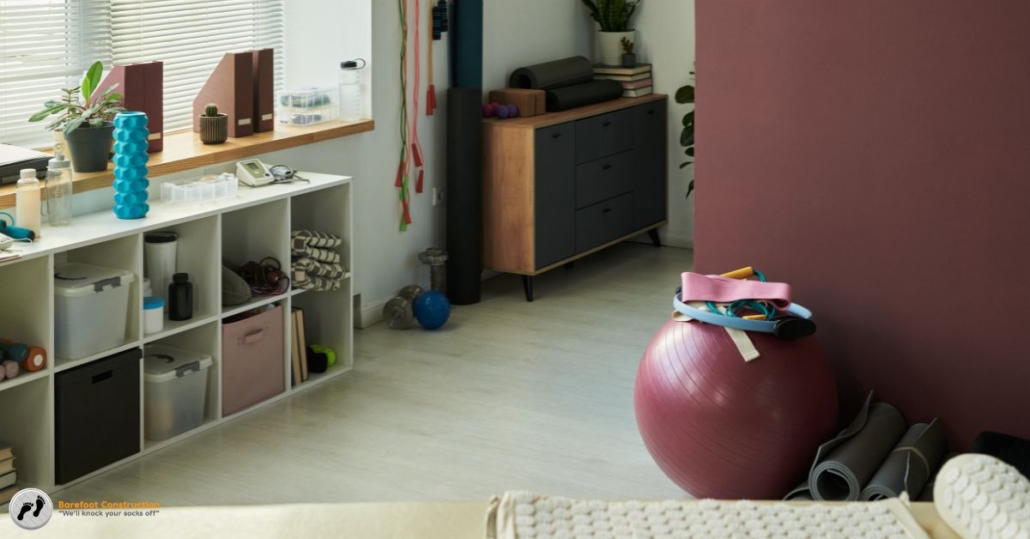
- Mobility & Stretching Area – yoga mats, foam rollers
- Recovery Area – massage gun station or stretching wall
Zoning improves safety and makes the room feel organized rather than cluttered.
Design tip: Rubber gym flooring should be installed in the strength area, while foam or vinyl plank works well in mobility areas.
2. Install Proper Gym Flooring (This Matters More Than Equipment)
In Minnesota basements, flooring is one of the most important design decisions.
Concrete floors are:
- hard on joints
- cold in winter
- prone to moisture
A professionally finished basement gym should include layered flooring:
- moisture barrier
- subfloor system
- rubber or impact flooring
Benefits:
- protects knees and ankles
- warmer surface
- protects foundation
- reduces noise upstairs
This is one of the biggest differences between a DIY gym and a professionally remodeled basement gym.
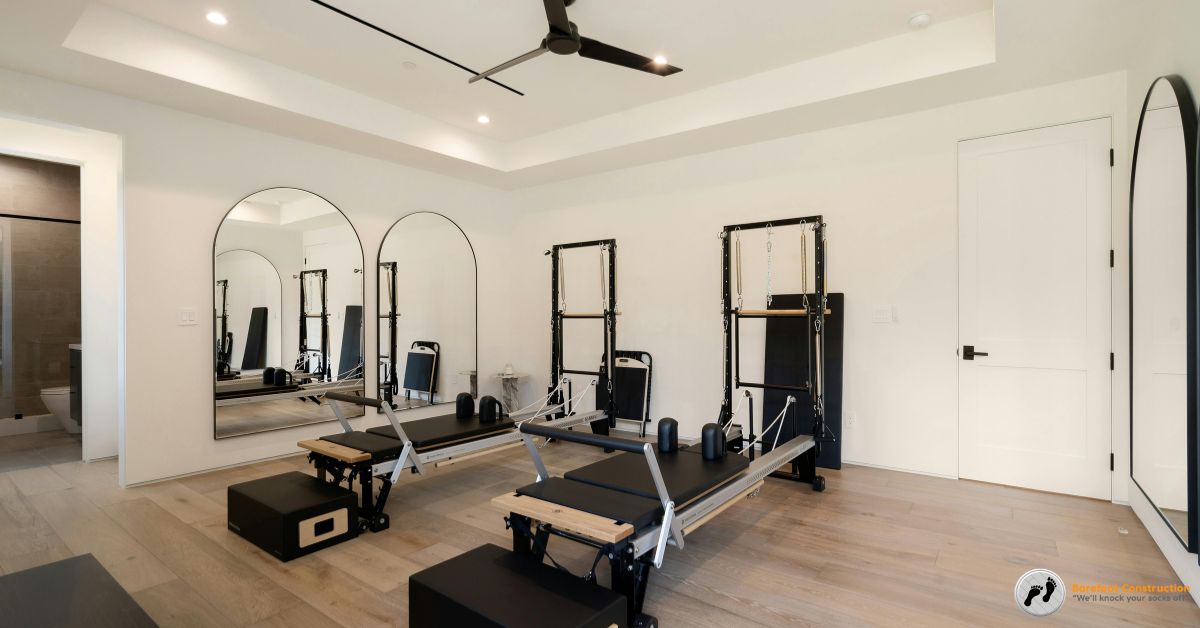
3. Add a Workout Mirror Wall
A mirror wall does more than aesthetics.
It helps:
- monitor lifting form
- improve posture
- make the room feel larger
- brighten a basement space
For safety, use tempered gym mirrors, not standard decorative mirrors. Barefoot Construction typically installs mirror panels along the main lifting wall for both safety and functionality.
4. Improve Basement Lighting (Critical for Winter)
Many unfinished basements rely on a single ceiling bulb. That environment kills motivation.
Winter in Minnesota already limits natural sunlight, so lighting design becomes essential.
Recommended Lighting Types
- LED panel ceiling lights (primary lighting)
- wall sconces (warmth)
- accent lighting behind mirrors
- daylight-temperature bulbs (5000K)
Good lighting can dramatically improve workout consistency and mood during winter months.
5. Include Ventilation and Temperature Control
This is the most overlooked part of basement gym design.
Basements in Minnesota can have:
- humidity
- stale air
- temperature fluctuations
A finished basement gym should include:
- dedicated air returns
- dehumidifier system
- ceiling fans
- insulated walls
Proper ventilation prevents odors, protects equipment from rust, and keeps workouts comfortable.
 Bonus Idea: Add a Recovery Corner
 Bonus Idea: Add a Recovery Corner
Many homeowners now request a recovery or wellness space next to the gym.
Popular options include:
- sauna
- cold plunge tub
- stretching area
- massage chair
- hydration station
These additions turn a basement into a full wellness space instead of just a workout room.
Does a Basement Gym Add Home Value?
Yes — especially in Minnesota.
Homebuyers increasingly look for:
- flexible living space
- home offices
- fitness areas
A finished basement gym signals usable square footage and year-round functionality, which can make a home more attractive in colder climates.
Planning Your Basement Gym Remodel
Before starting a project, homeowners should consider:
Ceiling Height
You need adequate clearance for overhead lifts and cardio equipment.
Moisture Protection
Basements must be sealed and insulated properly before installing gym flooring.
Electrical Needs
Treadmills and equipment may require dedicated outlets.
Noise Control
Insulation and ceiling treatments can prevent sound transfer to upper floors.
Barefoot Construction helps homeowners design layouts that work with their existing basement structure and Minnesota building codes.
Basement Home Gym
A basement home gym isn’t just a luxury — for many Minnesota homeowners, it’s the easiest way to stay active all winter.
By creating proper zones, installing impact flooring, improving lighting, and managing ventilation, your basement can become one of the most used rooms in your home.
If you’ve been considering a basement remodel, a gym is one of the most practical and year-round functional upgrades you can make.
FAQ: Basement Home Gym in Minnesota
Is a basement a good place for a home gym?
Yes. Basements offer privacy, noise control, and cooler temperatures ideal for workouts.
What flooring is best for a basement gym?
Rubber gym flooring over a moisture-protected subfloor is the best option for durability and joint protection.
Do basement gyms have moisture problems?
They can if unfinished. Proper insulation, vapor barriers, and ventilation solve this.
How much space do I need for a basement gym?
Most functional home gyms work well in 150–300 square feet, depending on equipment.
Do I need permits to remodel a basement gym in Minnesota?
If electrical, walls, or insulation are added, most cities require a permit. A remodeling contractor handles this process.
Can I add a sauna to my basement gym?
Yes, as long as ventilation, electrical capacity, and moisture protection are properly installed.