How to Plan a Basement Finishing Project: A Step-by-Step Guide for MN Homeowners
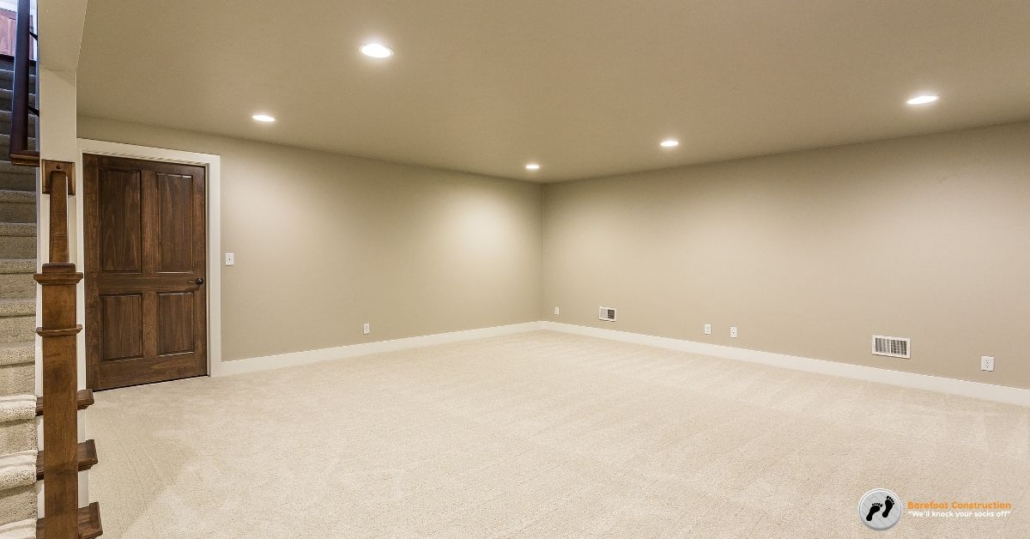
Finishing your basement is one of the smartest investments a homeowner can make, instantly adding valuable square footage and boosting your home’s equity. For homeowners in the northwest metro of MN, this project offers a chance to transform that chilly, concrete space into a warm, functional, and inviting part of your home—perfect for surviving another Minnesota winter!
At Barefoot Construction, we know that a successful project starts with solid planning. Use this step-by-step guide to planning your basement finishing project to ensure a smooth, on-budget, and code-compliant renovation.
Step 1: Define the Purpose and Layout of Your New Space
Before picking out paint colors, you need a clear vision. This is the foundation of your plan.
Determine the Function
What will the finished basement be? Common trends for MN basement finishing projects include:
- Recreational Spaces: Home theaters, game rooms, or a dedicated kids’ playroom.
- Guest Suites: Adding a legal bedroom and bathroom for visitors or in-laws.
- Home Offices or Gyms: Dedicated, quiet areas that don’t crowd the main floor.
- Wet Bars/Kitchenettes: Creating a perfect space for entertaining.
Sketch Your Floor Plan
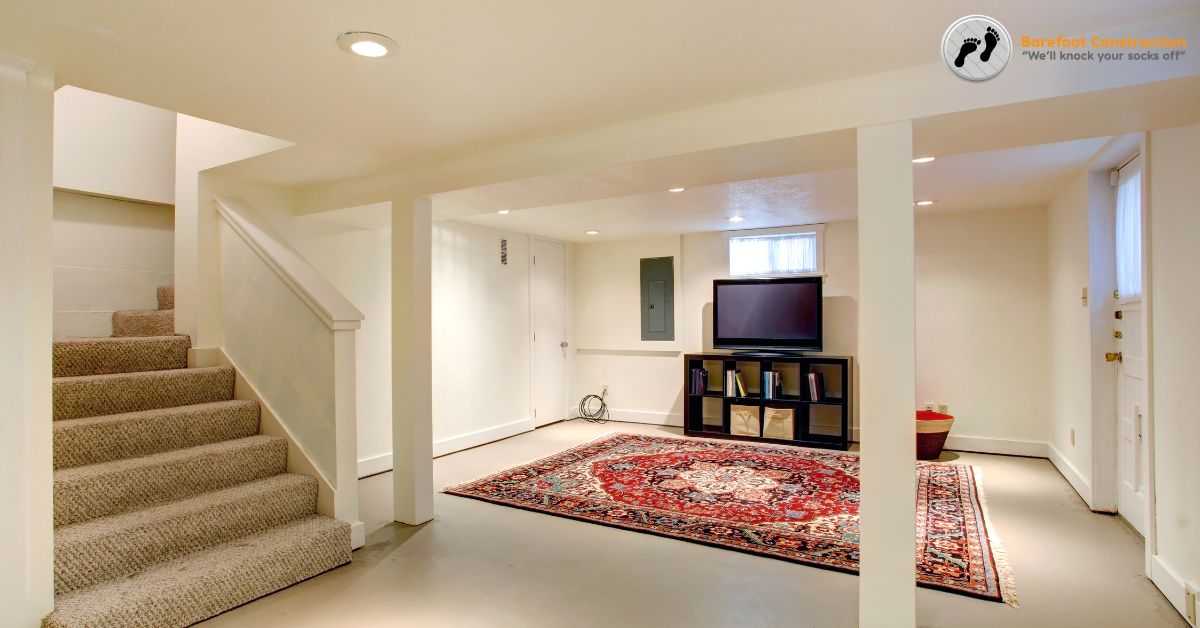
Map out the entire space, noting all fixed elements you can’t move: support posts, furnace, water heater, electrical panel, and sump pump. Your design must work around these essential systems.
Pro-Tip for MN Homes: Consider how to best use the space around mechanical equipment. Strategically placed walls or built-in cabinets can easily hide utility areas while maintaining necessary access.
Step 2: Address Structural Needs and Code Compliance
In Minnesota, especially in the northwest metro, basement projects are highly regulated. Planning for compliance upfront saves significant time and money.
Check for Moisture and Water Issues
The cold climate in Minnesota makes moisture control a critical step. A finished basement must be dry!
- Inspect: Look for water stains, mold, or a musty smell.
- Test: Tape down a square of plastic sheeting for a few days. Condensation underneath means water is coming through the concrete, requiring exterior drainage work or interior waterproofing. This must be addressed before any framing begins.
Understand Permit and Egress Requirements
Every city in the northwest metro (Anoka, Brooklyn Park, Champlin, Ramsey, etc.) requires a building permit for finishing a basement.
- Egress Windows: If you include a bedroom, state code mandates an egress window (escape window) that meets minimum size and clearance requirements. If you’re adding any “habitable space,” your basement must have an approved emergency escape route.
- Ceiling Height: Minnesota residential code typically requires a minimum ceiling height of 7 feet from the finished floor to the lowest structural projection.
Barefoot Construction manages all necessary permits, including separate electrical, mechanical, and plumbing permits, to ensure your project passes all required inspections.
 Step 3: Budget, Materials, and Professional Tenders
 Step 3: Budget, Materials, and Professional Tenders
Your project plan must include a realistic budget and a careful selection of materials designed for a basement environment.
Establishing Your Budget
Basement finishing costs in the Twin Cities area can vary widely, but expect to invest anywhere from $100 to over $200 per square foot depending on the complexity of the design (bathrooms, wet bars, custom features increase the cost). Set aside a 10-15% contingency fund for unforeseen issues like unexpected plumbing or electrical work.
Selecting Cold-Climate Materials
Choose materials built to handle potential moisture and temperature fluctuations:
- Flooring: Luxury Vinyl Plank (LVP), tile, or engineered flooring are far better choices than hardwood or traditional carpeting, as they are moisture-resistant and durable.
- Insulation: Rigid foam insulation or spray foam is often the best choice for basement walls in Minnesota to provide a continuous moisture and thermal barrier, a key factor in comfort and energy efficiency.
Partnering with a Local Contractor
Working with a local contractor in the northwest metro like Barefoot Construction is invaluable. We understand local codes, have established relationships with local inspectors, and are familiar with the specific soil and water issues common to the area. Get at least three detailed, itemized bids before making a final decision.
Step 4: Finalizing the Plan and Scheduling
Once the design, budget, and materials are locked in, the final planning step is to create a detailed timeline.
- Timeline Review: Your contractor will provide a schedule, typically breaking the project into phases: foundation/waterproofing, framing, rough-in (electrical, plumbing, HVAC), inspection, insulation, drywall, and finishing.
- Logistics: Plan for access for materials and construction debris. Determine where materials will be staged and where your family can avoid the noise and dust.
By following these four steps, you’ll be well-prepared to transform your unfinished basement into a beautiful, functional, and code-compliant living space, adding lasting value to your MN home.
Frequently Asked Questions (FAQ)
Q: What is the average ROI for a finished basement in Minnesota?
A: Basement finishing consistently offers one of the best returns on investment (ROI) among remodeling projects, typically adding 70% to 75% of the project cost to your home’s value. The added square footage is a major draw for future buyers.
Q: Do I need to move my furnace or water heater to finish the basement?
A: Not necessarily, but the mechanical equipment must remain accessible for service. Your plan will likely incorporate a mechanical room with a fire-rated door to enclose them. This is often an excellent way to reduce noise in the finished space.
Q: How long does a typical basement finishing project take?
A: A standard basement finishing project usually takes between 8 to 12 weeks from the start of demolition/framing to final paint and flooring installation, depending on the complexity of the design (e.g., adding a bathroom or kitchen will extend the timeline).
Ready to start planning your perfect lower-level retreat? Contact Barefoot Construction today for a consultation in the northwest metro area of MN!