Why Your Deck Stairs Are Sagging: Identifying Frost Heave Damage After a Minnesota Winter
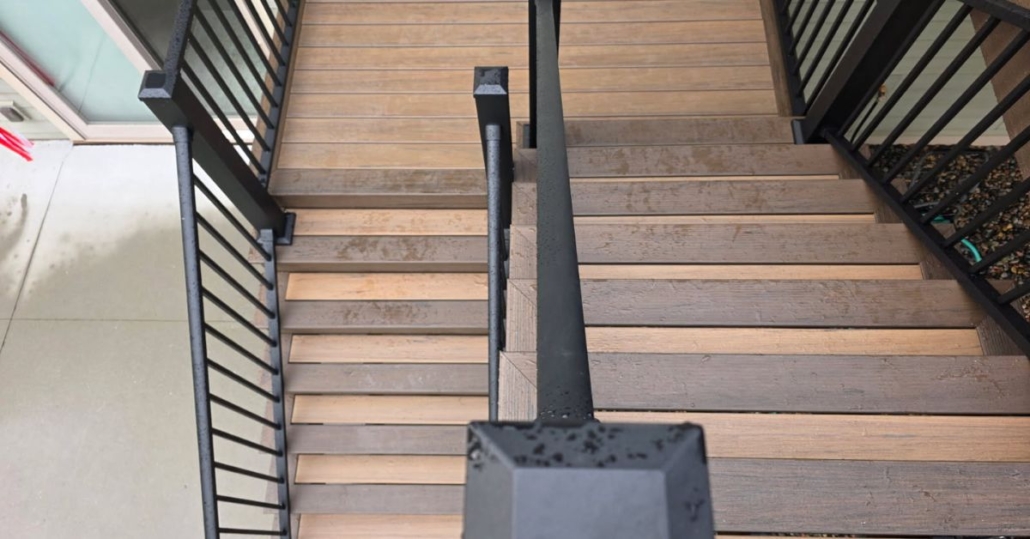
As the snow melts across the Bold North, homeowners often trade their shovels for clipboards to assess the aftermath of another brutal winter. One of the most common—and frustrating—discoveries is a set of deck stairs that no longer meet the ground evenly or a landing that seems to have developed a mind of its own.
At Barefoot Construction, we see it every spring: the dreaded “stair sag.” While it might look like a simple structural failure, the culprit is usually hidden deep beneath the soil. Here is how to identify if frost heave has compromised your Minnesota deck.
Understanding the Science of Frost Heave
In Minnesota, the “frost line” typically reaches depths of 42 to 60 inches. When moisture in the soil freezes, it expands by approximately 9%. This expansion creates upward pressure known as frost heave.
If your deck stairs were built on shallow “deck blocks” or footings that don’t reach below the frost line, the frozen ground literally lifts the foundation. When the ground thaws in the spring, the soil settles unevenly, leaving your stairs tilted, sagging, or pulled away from the main deck frame.
3 Signs Your Stairs Have Frost Damage
- The “Gap” or “Squash”: Look at the connection point where the stair stringers meet the deck frame. If there is a new gap, or if the wood looks crushed, the stairs have likely shifted independently of the deck.
- Unlevel Treads: Place a level on your stair treads. If they slope significantly toward one side or toward the house, the footings underneath have shifted.
- Cracked Footings: Check the concrete bases. Frost heave can exert enough pressure to snap concrete piers that aren’t properly reinforced or poured to the correct depth.
 The Permanent Fix: Going Deep
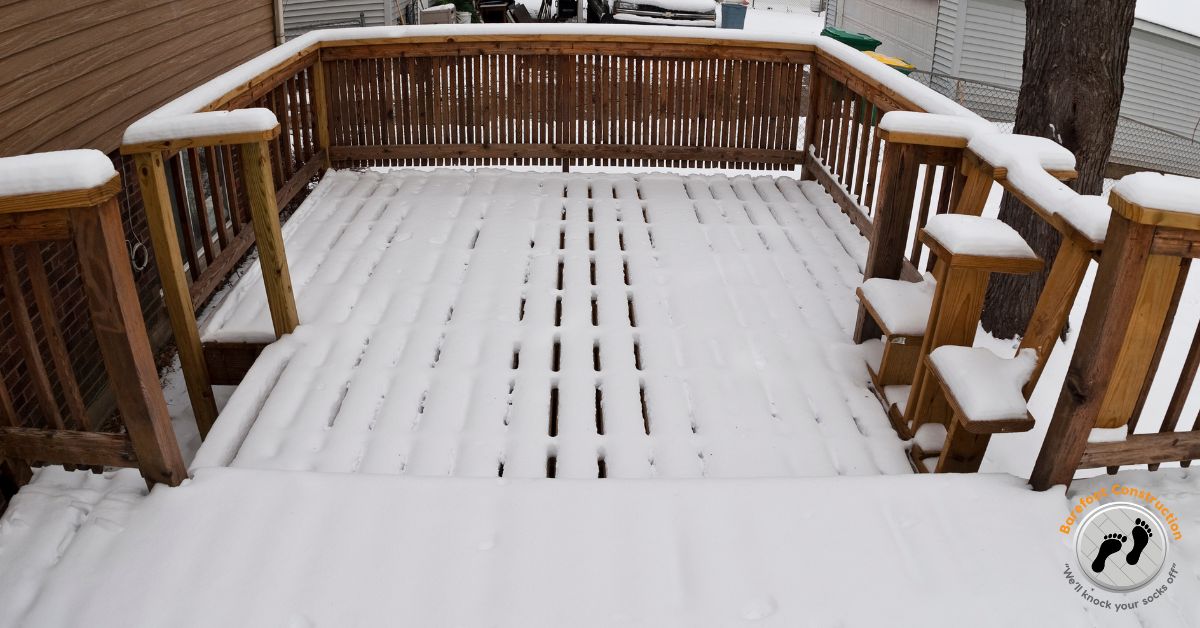 The Permanent Fix: Going Deep
While you can shim minor sagging, this “Band-Aid” fix won’t stop the recurring problem. To defeat frost heave for good, your stairs need a solid foundation:
- Deep-Set Footings: We pour concrete piers below the local frost line—usually 4–5 feet deep—to anchor your stairs in stable ground.
- Helical Piles: These steel screw-piles reach deep into stable earth. They are a modern favorite for Minnesota soil because they remain virtually immune to frost movement.
- Proper Drainage: Divert water away from the base of your stairs. This simple step reduces the moisture available to freeze, expand, and push your structure upward.
FAQ
Can I just add more dirt under sagging stairs?
No. Adding dirt or “packing” the area only masks the symptom. Without reaching below the frost line, the next winter cycle will simply move the new soil and the stairs again.
Is frost heave covered by homeowners insurance?
Generally, no. Most policies view frost heave and “earth movement” as maintenance issues or natural wear and tear rather than sudden accidental damage.
How deep should deck footings be in Minnesota?
To be safe and code-compliant, footers should be at least 60 inches deep in most parts of Minnesota to ensure they sit well below the frost line.